

What counts as an engagement
Anything text-based that captures what was discussed. Runwita accepts:- A transcript from any recording or transcription tool that exports text.
- Pasted notes from a conversation you took by hand.
- An exported
.emlemail thread. - A PDF or Word doc with notes.
- An image of a whiteboard or a screenshot, processed via OCR on macOS.
The Inbox
Everything starts in the Inbox.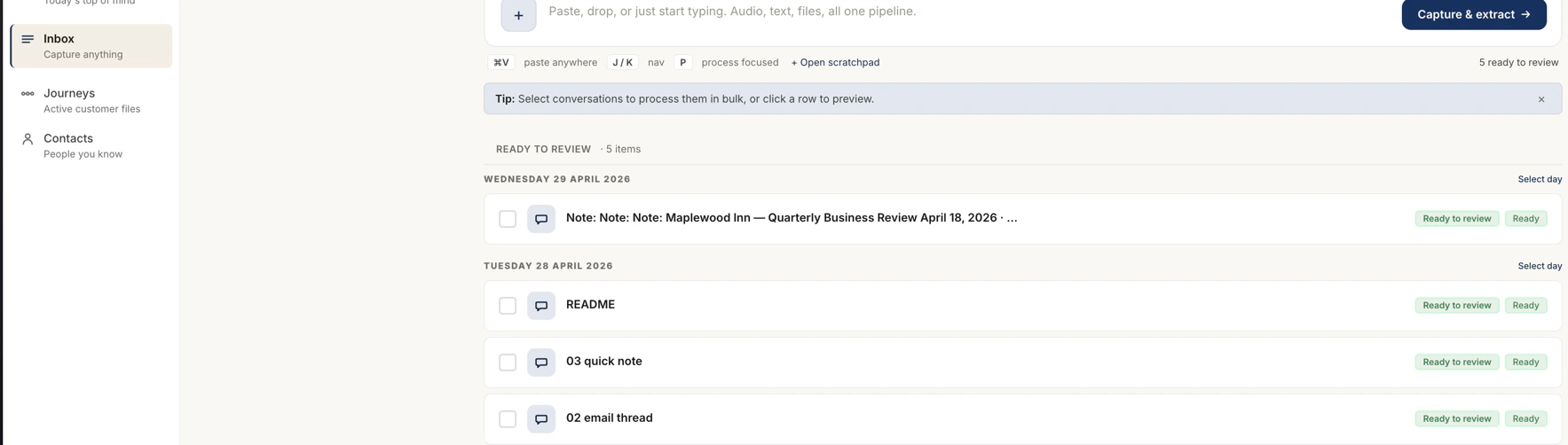
- Drag and drop a
.txt,.md,.pdf,.docx,.eml, or image file onto the Inbox. - Paste text directly using the Capture box at the top.
- Folder watch. If you’ve pointed Runwita at a folder in Settings → Connections, any new file dropped in that folder appears here automatically.
Process with AI
Click an inbox item to open it. You see the transcript on the left and a column on the right marked Runwita reading.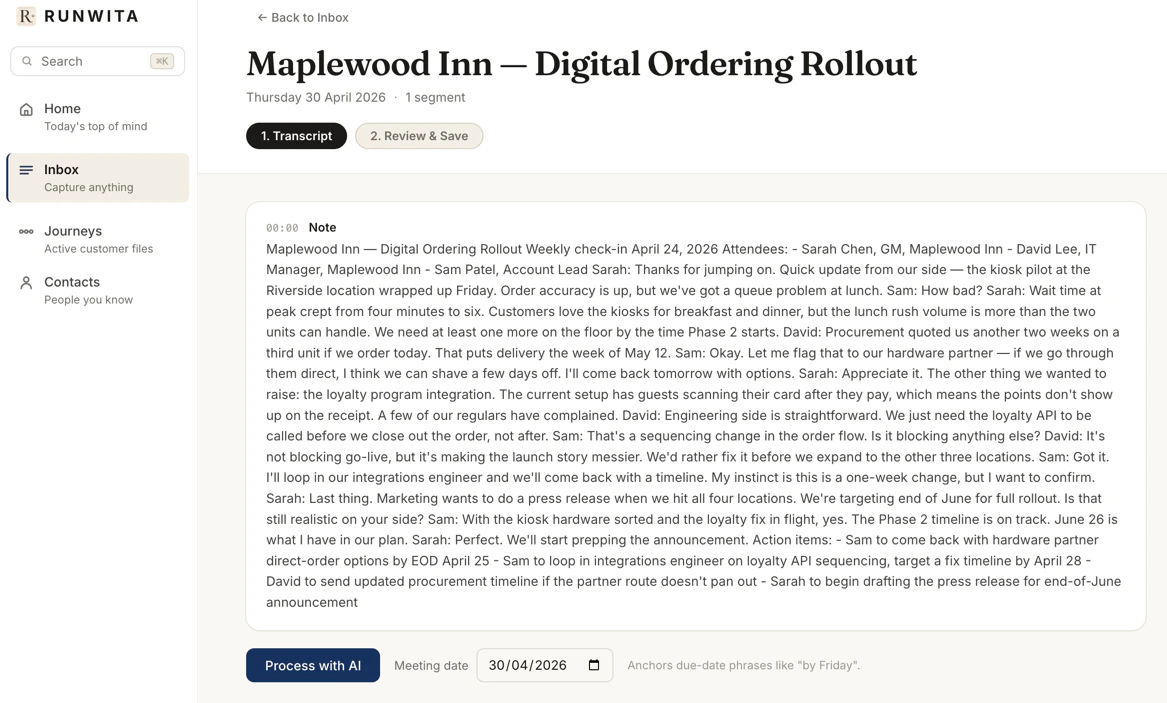
- Engagement date. Defaults to the file’s modification date. The AI uses this to resolve relative phrases like “by Friday” in extracted action items. If the date is wrong, the due dates on every action will be wrong. Pick the right date here.
- ↺ Reprocess with AI, throws away this extraction and drops you back to the start. Use this if the date was wrong, or you want to try a different model.
- Review & Save →, takes you to the review screen.
Review and Save
The review screen is your last chance to edit before the engagement is created.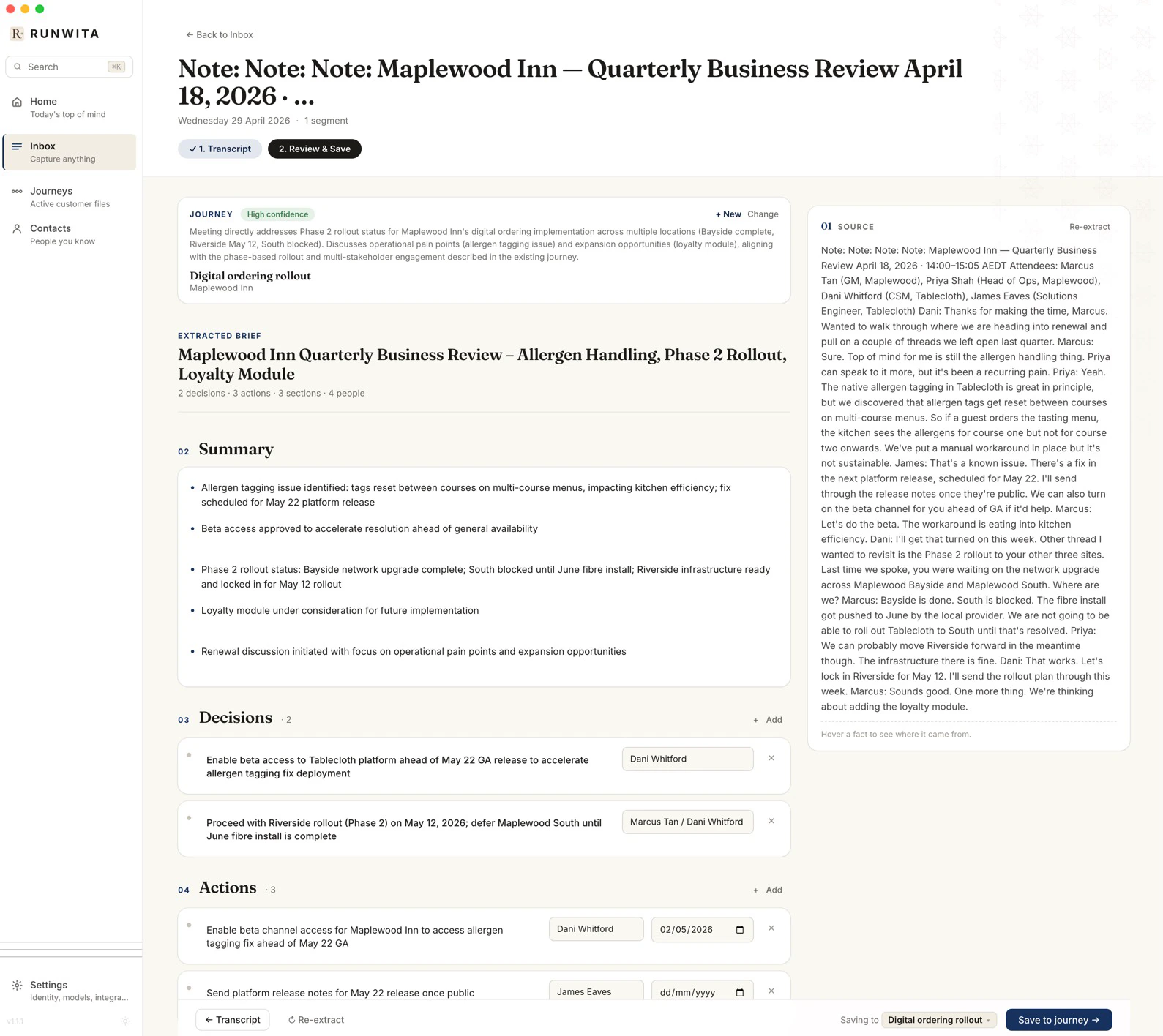
1
Journey
Runwita auto-suggests a journey based on the engagement content. You’ll see one of:
- High confidence, the AI is sure. Already selected.
- Medium confidence, plausible match. Already selected, but worth a glance.
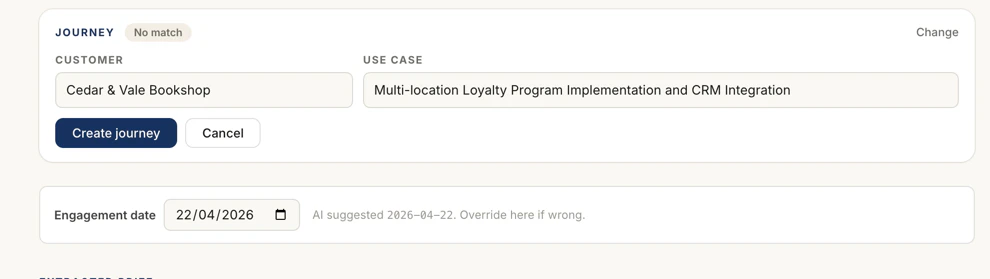
- Low / no match, you’ll need to pick or create one.
2
Engagement date
The AI’s best guess at the date, prefilled. Override here if it’s wrong. Whatever’s in this field at save time becomes the engagement’s date on the journey timeline.
3
The extracted brief
Title, summary, sections, decisions, actions, attendees. Everything is editable inline. Hover any line to see which part of the source it came from in the right pane.
- Creates the engagement on the journey.
- Runs topic matching, deciding whether each section maps to an existing topic on the journey or creates a new one.
- Pushes any TickTick-flagged actions to TickTick (if connected).
What just happened
In the database, Runwita just did all of this:- Created an
engagementrow linked to the journey. - Stored sections, decisions, actions, attendees as related rows.
- For each AI-detected topic, either created a new
topicor attached atouchpointto an existing one. - Marked the inbox item as processed.
What’s next
Concepts: journeys
The deeper logic behind journeys, why they’re shaped the way they are.
Concepts: topics
How threads of discussion span engagements.